Nichole Lacuzzo
Special to The Leader
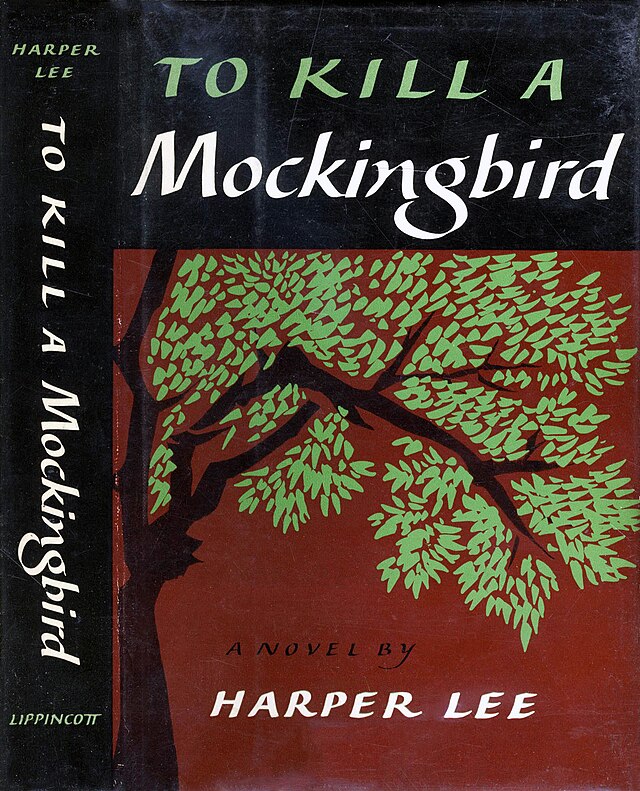
To Kill a Mockingbird’ by Harper Lee. This image is free to use under public domain
22,810 books have been banned from U.S. public schools from 2021 to 2025.
“Access to literature prepares our youth to confront the real world, offering a window into experiences otherwise unknown to them. However, diverse ideas and stories featuring protagonists from historically marginalized identities are often the first topics targeted by censors,” (PEN America, October 2025).
PEN America is a nonprofit organization with the goal of protecting free written expression in the U.S.
This quote focuses on how all types of books prepare us for living our lives and the texts that we need the most are the ones that are being censored to the public.
People in power like pressure groups, PTA, parents, elected officials, board members and administrators, shelter these books that need to be read to the students.
As a result, the kids don’t get the proper education they deserve.
I had the opportunity to speak to Zach Farren, a junior English and history education major.
Farren is also a writing tutor on campus with an astonishing 4.0 GPA in English education.
During his high school experience, Farren read “The Hate You Give,” “The Giver,” “Animal Farm” and “Invisible Man,” all books that have been banned in other public schools across the country.
Farren has a more culturally respective response to the world, and he’s able to empathize with people that have a different background from him because of the way the books teach lessons and morals.
Farren found a love for “Animal Farm.” The story connects with historical topics including fascism, and he thinks about the current political state in the world when reading this.
This book covers an abundance of what’s going on in today’s day and age in a very educational and professional setting.
In addition, Farren would love to teach “The Giver.”
It’s an introduction to distortion novels for students.
“The Giver” is a great example of “why on earth are these books actually getting banned?”
This book shows topics of individualism, world building, human experience, emotional development and the necessity of pain.
These are topics children need to learn to better understand themselves and be ready for challenges that will come along the way.
Banning books is an attempt of indoctrination. Parents sheltering their children are hearing rumors and theories about the books that are simply being made out to be much worse than it actually is.
Parents should just read the books themselves, do research and really sit with the criteria before causing such an uproar.
Powerful people are pulling works out of school and not allowing the children to learn texts that can help them build empathy and an understanding of other cultures and ideas.
My father, Jack Iacuzzo, is also an English teacher at Washington Middle School in Jamestown.
I decided to speak to one of his colleagues, Eric Anderson.
I chose to speak with him because he has been an English teacher for about 28 years now.
Anderson was also a member of the military before becoming a teacher.
He has taught multiple banned books in his career including, “To Kill a Mockingbird,” “Lord of the Flies,” “The Giver,” “In Cold Blood,” “The Outsiders” and “The Diary of Anne Frank.”
His all-time favorite book to teach is “The Outsiders” because it is still relevant to his students’ lives.
One of his favorite things to see as a teacher is the students being engaged and overly interested in the topics of the novel.
They can relate to the characters because every single character reminds them of a friend or family member they have; it’s a text to self-connections.
He also favors teaching “To Kill a Mockingbird” because it helps the students learn about empathy and segregation. It promotes discussion and debate among the seventh and eighth graders.
The topic of good vs. evil is also shown through the fight for justice.
Anderson believes that children should be surrounded by readings like this that challenge critical thinking skills and understanding morals.
Anderson’s opinion on banned books is that nobody should tell someone else what they can and can’t do.
Everyone needs to be tolerant that people have opinions, and they need to have an open mind.
Every book should be available to the public, and it is their own decision to pick it up and read it themselves or share it with others.
Lastly, I asked Anderson, “How do you feel with certain school districts demanding teachers use a purchased curriculum instead of choosing what they desire to teach?”
He expressed that every one of his students has different learning needs and most of the purchased curriculums do not provide enough differentiation activities for students to grow academically.
Furthermore, there are visual learners, verbal learners and auditory learners who need different techniques to excel.
Many teachers are frightened and exhausted of what might come when they choose a particular piece of text because there are eyes watching them all the time.
It’s growing more and more frustrating, especially to an English teacher.
American teachers are struggling to deal with this issue, and it’s getting more difficult to bring engaging books to the students.
I would highly encourage more people to show up to board meetings and speak up about what they truly feel because books are not going to stop being banned unless we voice our opinions.
Our words are the most powerful way to get things done, and it shows how much we care about the power of free speech; we will not be silenced.
I strongly believe that buying banned books is another way of showing support because it proves that we actually want to read the stories.
I have recently started buying the books that I wasn’t taught because I want to see what I was missing out on.
I am starting my own collection and writing reviews after I finish each book, and each one so far has been positive opinions on why they most definitely should be taught in a public school.
Why should we silence authors who work so hard to publish a book?
It’s extremely unfair to just pluck their work off the shelves and make them feel invalidated with their talented writing.
For one, I would’ve loved to read every single book I mentioned in this paper, and I wasn’t introduced to any of them in my academic years.
I am just one student who failed by the rules.
Imagine how many more kids there are that had it much worse than me.
I will keep reading what I want to, and nobody can stop me.