
ALI SALAS
Special to The Leader
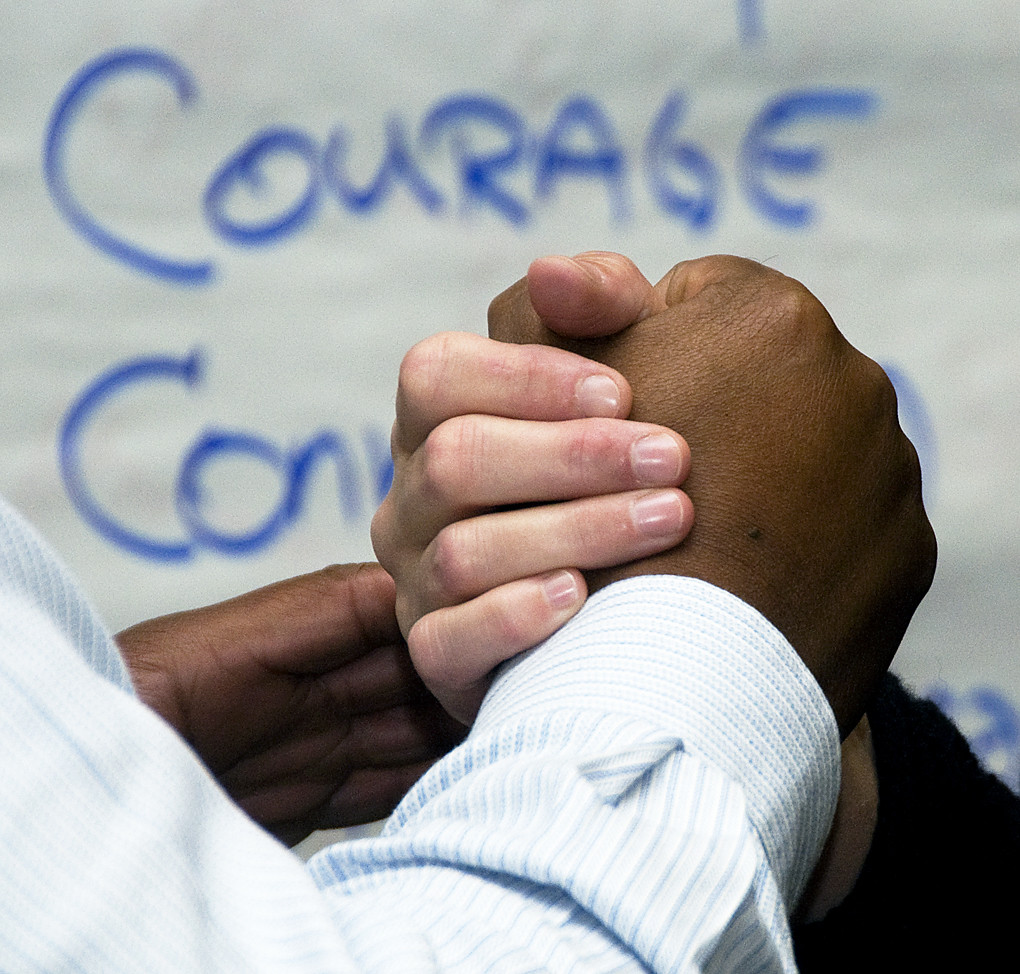
2011 Diversity Conference” by OregonDOT is licensed under CC BY 2.0.
“Whenever we encounter even subtle forms of racism it is important to use [your] white privilege to call it out to challenge race-related biases and problematic attitudes,” Associate Professor Phoebe Lin and their colleagues wrote in a March 1, 2023 article in the International Journal of Higher Education and Social Sciences.
American society has trampled and spit on the descendants of the slaves and immigrants who built this country; the generational beatings change forms but never disappear.
Nowadays, things look brighter, but only when organizations like Black Lives Matter are created are victims heard. With the slow and sudden militarization of ICE and the police, this isn’t the time to be quiet.
We’re all aware of who the real targets are.
You know, as a white person, there’s no threat to you racially; the system was designed for you to succeed.
You want to do right by those who are neglected, oppressed and silenced.
Because you care, you’re already doing better than the government.
I can help you improve your allyship if you’re willing to continue in good faith, reflect on what you have done and what you can start.
A Base-Level Understanding:
Let’s get the easy stuff out the way: No slurs or derogatory terms should be in your vocabulary.
In this day and age with modern technology, you should know what is offensive and what isn’t.
But because I have heard some words being thrown around, I’ll reiterate: No variations of the n-word should come out of your mouth (including Negro!).
Now that we all agree on that, we can continue.
Step #1: Research
Starting off nice and simple, the basic act of researching the root problem of racial issues like discrimination, prejudice and hate crimes can do wonders.
Why did a lady call the police on Black people just trying to have a barbeque?
Did she really think they were criminals, or did her entitlement make her believe she could run them off?
Why did a man yell at a Mexican woman for speaking Spanish in a store?
Did he panic and yell because he couldn’t understand her, or did he think yelling would scare her into being fluent in English?
These all have easy answers. But where researching these interesting cases comes into play the most is systematic racism.
Why are Black and Brown people disproportionally convicted?
Why are they pulled over and never know if they’ll come out breathing?
Why are they set up to fail?
Some of us get turned away based on our names alone.
The more you investigate factors playing a major role in these situations, the easier it will be to spot it in yourself and others.
Step #2: Know There’s No Neutrality
When it comes to racial issues and discrimination, there is no “both sides are wrong.”
There is no “both sides have a point.”
Playing the fence like that, trying to appease both the victim and the oppressor, will do more harm than you think.
When you try to tell us, “Both of you are wrong,” all we hear is, “I’m too scared to support you in public.”
You’re scared? And we’re not?
This attempt to be the peacemaker slips into something called false balance.
Megan N. Imundo and David N. Rapp describe this in their 2021 article, “Misrepresenting two sides as equally supported when they are not,” published in the Journal of Applied Research in Memory and Cognition.
By not taking a stand, you’re only making the fight harder.
You’re making it easy for others to ignore their own prejudice/racist thinking.
Don’t give them any more chances to attack.
Step #3: Stay On Topic
It’s nice that you want to share the experiences or struggles you have overcome or still need to, but know when to include yourself and know when to stay silent and listen.
The best thing you can do sometimes is just listen.
If you ever find yourself going to say, “I’m a gay/queer person and I…” or “I’m a trans person and I…” or “As a woman, it’s really…”
Stop.
Don’t say it.
It’s not going to help the way you think it is.
We’re talking about issues people of color face daily.
That has nothing to do with the layers of your identity.
At the end of the day, you are still white.
The first thing people will see is the color of your skin.
A white woman may not have the power a white man has, but her tears can still kill.
There are two things that happen when you say something like that.
One: It opens the discussion for other queer people, trans people, women, etc. to share their own stories which causes the initial topic to get drowned out.
We’re no longer talking about what was brought up in the first place.
Two: It tells us the issue wouldn’t have mattered if you couldn’t relate to it.
Show us that you have some sympathy and feel as bad as we do.
You don’t have to relate to everything.
I interviewed one of the few people of color on SUNY Fredonia’s white-dominated campus, Pwint War, a junior psychology major soon to be graduating.
She shared that she gets absurdly annoyed (after being amused) when a white person begins their statement like any of the above and thinks, “You don’t have to insert yourself in every situation for you to be able to connect or empathize with something.”
“You don’t have to center the conversation around yourself to understand the points that are being made,” is something that stuck with me throughout this interview, and it should stick with you too.
Out of everything on this list, this is the one I’ve seen and heard the most — all in good faith, of course.
Now that you know the drawbacks, when someone is talking about racial discrimination, ask yourself, “Is this an appropriate thing to say?”
Step #4: Don’t Be Scared
I know how intimidating it is to put yourself out there and use your voice for something you believe in, but if you’re reading this far, you’re willing to take a chance.
You don’t have to take one big leap and start posting resources, news sites or anything like that.
You can take it one step at a time.
Talking to your peers about discussing critical race theory and debating where it comes into play — little things like that can create the biggest change.
None of that will matter if you’re doing absolutely nothing.
Don’t hoard all the information, go spread it around.
You can’t be scared if you want to be an ally.
You can’t let fear keep you silent if you truly want to fight for racial equality.
Making it to the end now, do you see yourself reflected in anything you read?
Whether it’s something objectively good or bad, you know now what you should continue doing and what you should stop.
This guide doesn’t include everything, but I’d like to think it’s a good foundation for you to build off.
Just know with solely the information you have from reading, you’re ten times smarter than our nation’s president.
I’ll offer one last piece of advice before you go, Researcher Melissa Karnaze wrote in their April 10, 2023 article discussing white allyship in Frontiers in Psychology journal, “Similarly, actions motivated by compassion should result in allyship, rather than saviorship.”
Do not play the hero, play the sidekick.