
ALEX BUCKNAM
Managing Editor
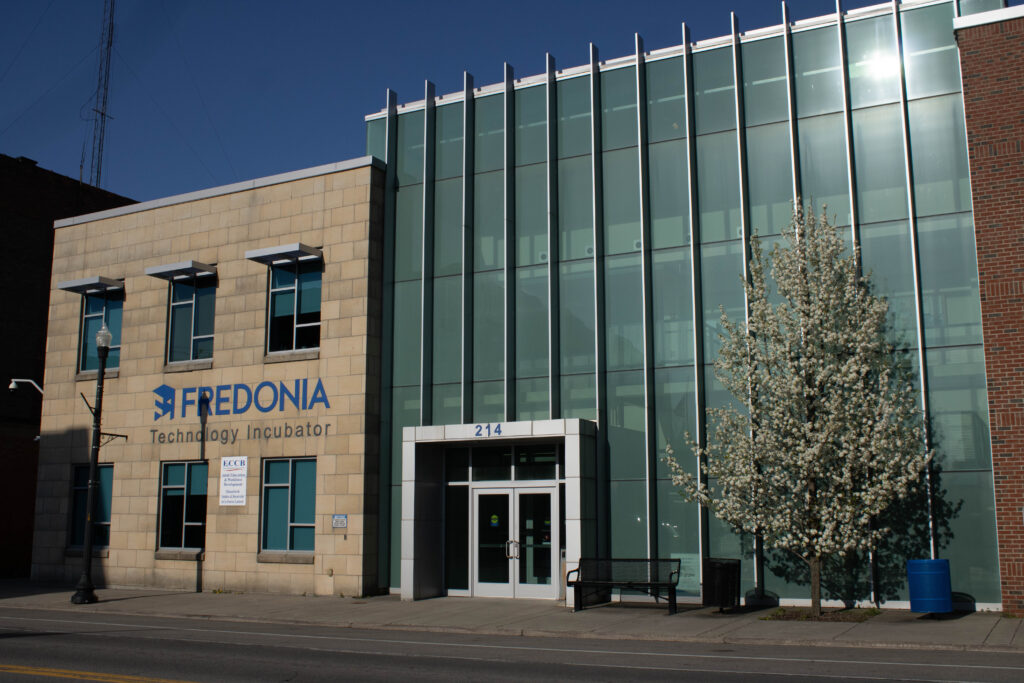
Photo by SAM HEBERT | Special to The Leader
As the school year comes to a close, budget and program cuts remain at the forefront of concerns for many at SUNY Fredonia.
The latest update students received on where the school was with the second round of program cuts was on Friday, March 13 via email from President Stephen Kolison.
Kolison announced that he received materials from the provost’s office.
He then said that he assigned his cabinet to review the materials and provide their insight on it.
Lastly, he said he would do his own independent research and then submit his findings to the University Council. “Once I have their [president’s cabinet] input, I will conduct my own independent review and then share my perspectives with the University Council and our partners at SUNY for additional advice and feedback. With those insights in hand, and as needed,” the email read.
Additionally, he said he would meet with department chairs.
Kolison stated that such meetings do not give insight into what programs could be on the chopping block.
This comes as Fredonia is still facing a multimillion-dollar deficit that SUNY wants them to handle on their own, rather than giving them money to alleviate the deficits.
The university has already chosen not to recontract a number of part-time, untenured professors and issued retrenchment letters to multiple faculty members to help manage the deficit.
Chuck Cornell, director of the Center for Innovation and Economic Development (CIED), has been reported to have received a retrenchment letter.
This would make Cornell the fifth faculty to receive a retrenchment letter, in recent years.
It is unclear how the reported retrenchment would affect Cornell’s other roles at the university.
Cornell could not be reached for comment by press time.
Others include Michele Bernatz, who opted to retire, Peter Tucker, Stephen Komp and Stephen Kershnar.
It remains unclear what Cornell’s retrenchment means for the future of the CIED, a program that has played a role in connecting the university with regional economic development efforts.
It is also unknown whether the decision is directly tied to ongoing efforts to address Fredonia’s multimillion-dollar deficit.
Retrenchment is defined as the termination of an employee due to financial necessity, restructuring or a reduction in workforce.
In higher education, it is typically associated with budget shortfalls or declining enrollment, both of which Fredonia is facing.
When the president’s office was asked about Cornell’s situation and what it could mean for the future of the CIED, they declined to provide details.
“University policy doesn’t allow us to comment on questions related to personnel matters,” the office said in a statement.
The lack of clarity has added to concerns among students and faculty, many of whom are already navigating changes to academic programs and course availability.
Fredonia has been working to reduce its deficit through a combination of cost-cutting measures, including staffing reductions and program adjustments.
The contents of the letter Cornell reportedly received are unclear, and it is unclear when his position at Fredonia will end.
Previous letters varied in dates, with some given three academic years in advance.
Kershnar was given one academic year when his letter came in May 2025, and his position will end at the end of the semester.
For now, the future of the CIED remains uncertain.
As the semester ends, many at Fredonia are left waiting for more information on what comes next — and how deeply the cuts will continue to affect the campus.
This is a developing story.