
Alex Bucknam
Editor in Chief
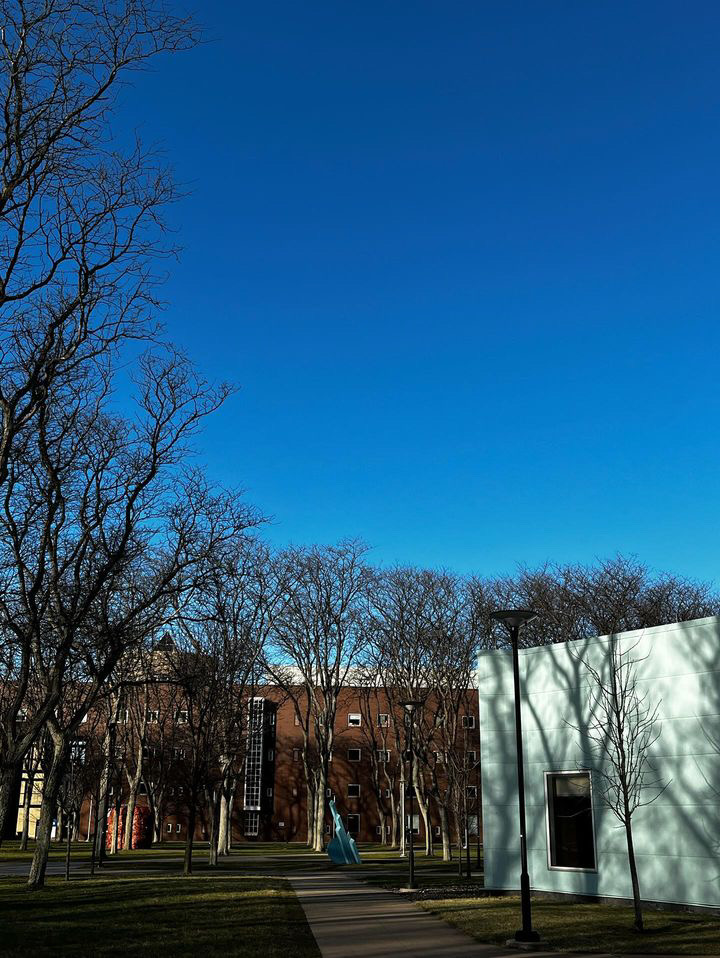
Photo by Alex Bucknam| Editor in Chief
On Tuesday, May 19, SUNY Fredonia President Dr. Stephen Kolison announced the elimination of 10 undergraduate programs, four graduate programs and seven associated minors as part of the university’s ongoing efforts to address financial challenges.
Programs affected are the following:
Undergraduate Programs
Communication – Audio/Radio Production
Cooperative Engineering
Economics
International Studies
Mathematics
Mathematics (Applied)
Mathematics – Physics
Physics
Physics: Adolescence Education
Political Science
Graduate Programs
Biology
Mathematics Education 7-12
Music Composition
Music Therapy
Associated Minors
Applied Mathematics
Data Science
Mathematics
Statistics
Physics
Economics
Political Science
Fredonia’s website stated, “The undergraduate Mathematics Adolescence Education, grades 7–12, program will continue to enroll and graduate students. This program leads to initial certification as a math teacher.”
The announcement came on schedule according to a timeline Kolison presented during the University Senate Council meeting on Monday, May 4: “May 19th-May 20th, chairs, departments and campus are notified of decisions.”
Following the Senate meeting, it was unclear to senators and observers if students would be included in that May 19-May 20 timeline.
During that meeting, senators raised concerns about how the cuts would be communicated to students and faculty. Dr. Jeanette McVicker, senator of interdisciplinary studies, warned against students learning about the changes through outside sources before hearing directly from the university.
“I’m worried that the news will be leaked to the press and spread through word of mouth,” McVicker said. “That’s not an appropriate way for this type of news to reach the campus.”
Kolison responded by saying he would take precautions to prevent that from happening, prompting further concern from attendees.
McVicker replied, “Let’s not squash the First Amendment in a public meeting.”
Kolison stated that the cuts are part of Fredonia’s broader “Roadmap to Financial Sustainability,” which he described as a multi-year effort focused on strengthening enrollment, improving efficiency, managing expenses, aligning academic offerings with student demand and investing in areas of growth.
According to the university’s FAQ page regarding the cuts, approximately 111 students are expected to be enrolled in the affected majors during the Fall 2026 semester, while about 60 students are projected to be enrolled in associated minors.
Those students, combined, account for less than 5% of Fredonia’s total student population.
The administration also pointed to low incoming enrollment in the affected programs.
According to the university, only 25 newly deposited students were planning to enter those majors and minors.
“The changes are intended to better align Fredonia’s curriculum with current and future student demand while allowing the university to focus resources on areas where enrollment and interest are growing,” the FAQ page said.
These cuts are the second major round of program eliminations in recent years as the university attempts to address a multi-million-dollar deficit.
The first round came at the end of the Fall 2023 semester, when Fredonia discontinued 13 programs that were described as having low enrollment.
Those cuts sparked protests and criticism from students who argued the university was reducing academic opportunities while failing to communicate openly with the campus community.
Some students say similar concerns remain today, particularly because the latest announcement came the Tuesday following finals week, after most students had already left campus.
Only townhouse residents were still allowed to remain on campus, excluding summer residents, at the time of the announcement.
The timing has led some students to question the administration’s transparency and whether the university intentionally waited until campus activity had slowed to announce the decision.
Another concern among students is the long-term impact on their education.
The university’s administration claims that students currently enrolled in affected programs will still be able to complete their degrees through a “teach-out” process, though the university will stop accepting new students into those majors and minors.
However, some students impacted by the first round of cuts argue that teach-outs have not always worked as promised.
“I had to switch minors because classes were not offered,” a student said on Yik Yak, an anonymous social media platform.
Questions also remain about whether additional cuts could follow in the future.
“It’s another thing you won’t get from me: a list of programs that are at risk, and there needs to be some intervention in order for them to be sustained,” Kolison stated while discussing the timeline during the Senate meeting.
The cuts have especially upset students and alumni connected to the Communication-Audio/Radio Production program.
Dan Berggren, the creator of the program, made a post to the “Fredonia Audio & Radio” Facebook group, in which he said, “It’s never easy dealing with the death of a loved one, and that’s how it feels witnessing the end of the audio/radio program.”
Some pointed to recent accomplishments within the department associated club as evidence that the major remained successful despite low enrollment.
“The radio station won four awards; WDVL won best streaming station under 10,000 students,” stated Megan Kidby, outgoing WDVL Program Director and graduate of the Class of 2026. “But sure, let’s just cut the major, and let’s announce it after graduation so fewer people can protest.”
The Fredonia Radio Systems is a club funded and recognized by Fredonia’s Student Association, though former and current club members believe that the discontinuation of the Audio/Radio program will have rippling effects on the club.
The award Kidby was talking about was won by Fredonia Radio Systems at the Intercollegiate Broadcasting Systems conference in February.
As of May 20, the university has not publicly stated how much money it expects to save through the program eliminations.
Students also have not received access to financial sheets that were distributed to faculty during the Fall 2025 semester, leaving many without a clear understanding of how much these cuts will affect Fredonia’s budget deficit.
It’s also unclear what these program cuts mean for faculty in affected programs.
“Personnel matters are handled separately through established university procedures, applicable collective bargaining agreements, and shared governance processes.” states the Fredonia FAQ website.
Following the 2023 program cuts, a few professors were issued retrenchment notices months after the announcement.
Fredonia maintains that people outside of the affected programs will not be impacted, as courses within the affected programs will still be offered when needed to help complete their degree.
Questions regarding program deactivation can be found at fredonia.edu/about/offices/president/roadmap-financial-sustainability/FAQ.